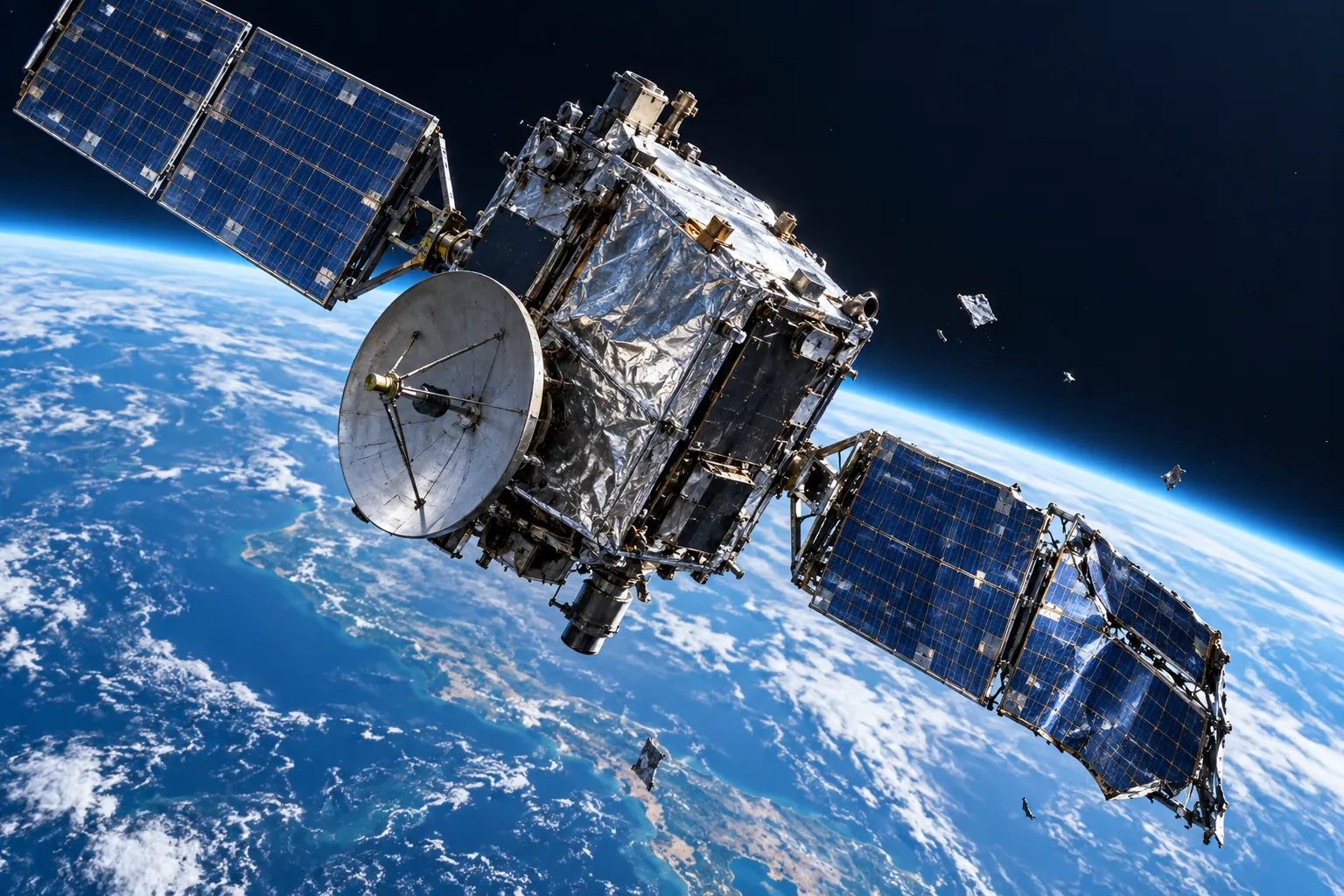
Space debris isn't short of concern. It's short of a bill that somebody can't duck.
I don't think clearing rubbish out of orbit becomes a dependable business just because the rubbish is dangerous. It becomes one when leaving it behind costs an operator more than arranging collection. Until then, the clever machinery risks solving a problem everybody recognises and somebody else is expected to fund.
We're talking about dead satellites, spent rocket hardware and the fragments they leave behind. ESA's latest orbital census puts launch activity at around ten new payloads a day, while more than three intact satellites or rocket bodies re-enter the atmosphere daily.[1] Those are different categories, not a neat subtraction exercise. More importantly, ESA projects that debris would keep increasing even if launches stopped, because fragmentation creates rubbish faster than it naturally falls back.[1]
That's the nasty bit. A crash doesn't just remove two objects from the road. It can manufacture more traffic.
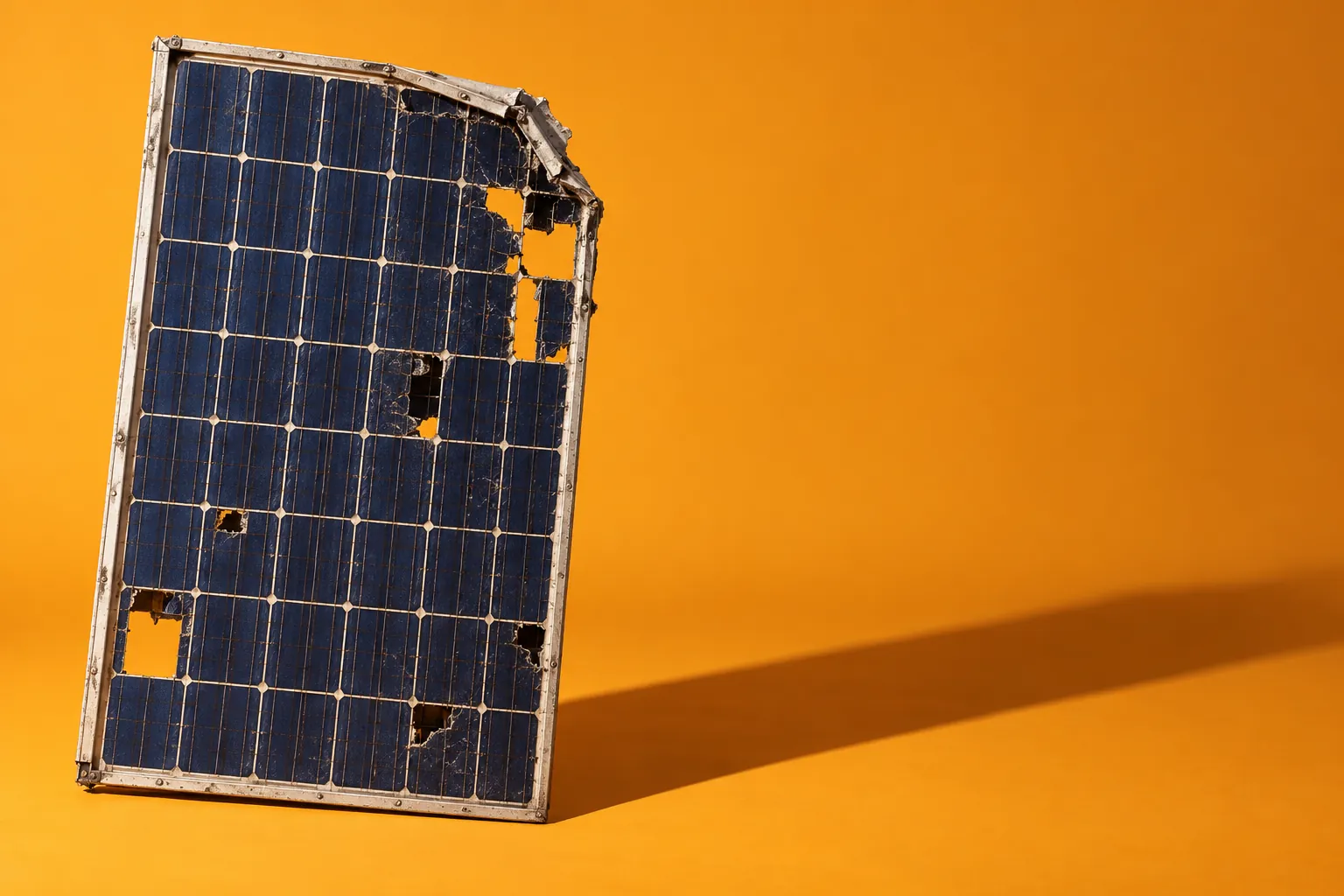
Humanity has reached the point where taking the bins out requires a spacecraft. The council would still insist you've put the wrong thing in the blue one.
The rubbish isn't the customer
There's an attractive story here: a crowded orbit, a robot that grabs unwanted hardware, a useful service and therefore a lovely business. I like the first three parts. The word "therefore" is doing rather a lot of unpaid work.
A problem can be enormous without producing a customer who'll sign a recurring contract. The people who benefit from a cleaner shared orbit aren't necessarily the people responsible for each piece of rubbish. A dead satellite doesn't have a purchasing department. It has, quite literally, stopped responding to emails.
Call me cynical, but the attractive version for satellite operators is one where they earn from working satellites and somebody else underwrites the difficult cleanup. That's an incentive problem, not an accusation that every operator behaves badly. The cleanup company, meanwhile, needs an actual payer, not an audience nodding enthusiastically about the future of space.
That distinction matters more to me than whether the robot has three arms or four. You don't get a waste-management business by writing "sustainability" on a spaceship. You get a more expensive brochure.
There are real consequences for getting disposal wrong. DISH agreed to a $150,000 civil penalty after moving its EchoStar-7 satellite to a disposal orbit only 122 kilometres above its operating orbit, rather than the 300 kilometres required by its licence.[2]
EchoStar-7 wasn't in low Earth orbit, so that settlement isn't a template for every satellite.[2] What interests me is the less glamorous point: a disposal promise became a specific obligation with a consequence attached.
An enforceable obligation is a better foundation for a cleanup business than a collective hope that someone will be responsible.
A brilliant robot still needs an invoice
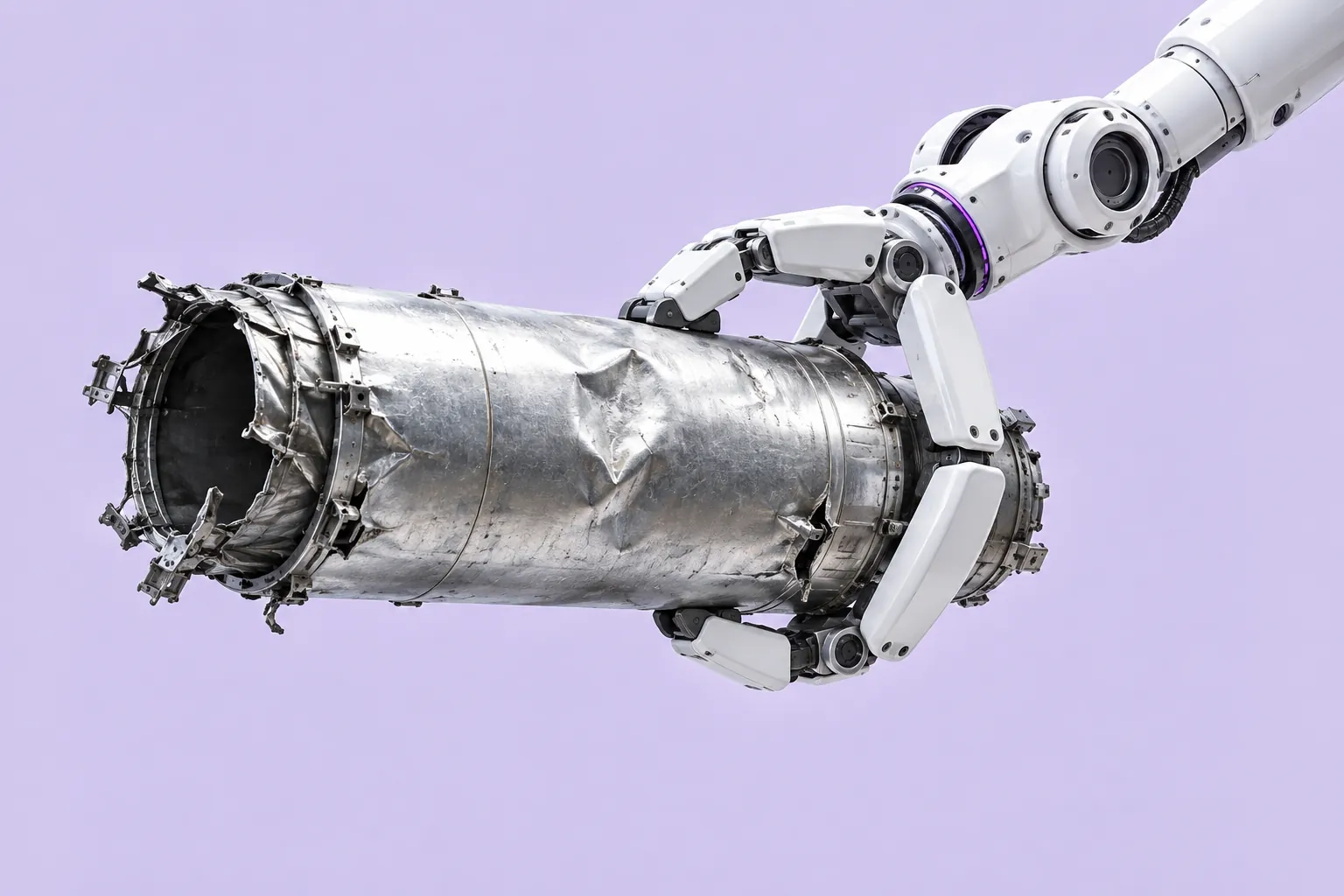
ESA's ClearSpace-1 mission makes the engineering tangible. It's a planned demonstration to capture and remove the agency's 95-kilogram PROBA-1 satellite, with OHB leading an industrial team that includes ClearSpace. The mission uses four robotic arms.[3]
That's a specific object and a specific job, not a magic hoover for everything circling Earth. I find that more convincing than a grand promise to clean up space. A small, defined task can be checked. An enormous aspiration can survive indefinitely on conference panels.
But proving that a machine can collect one object isn't the same as proving there's a repeat market at a price customers will accept. A government-backed demonstration can establish what works. It doesn't, by itself, tell us who pays for the next collection or why they can't simply postpone it.
My read is that the durable advantage here won't be the most photogenic gripper alone. It'll be making removal part of the satellite's original commercial arrangement: who owns the obligation, what counts as completion, and where the money comes from if the hardware stops cooperating. That's a business-design judgement, not a claim that those arrangements already exist everywhere.
I'd give more credit to a boring, funded disposal obligation than another stirring declaration about protecting the heavens. Tracking dangerous objects, preventing new debris and removing old hardware serve different purposes; ESA's assessment is that prevention alone is no longer enough.[1] The engineering deserves respect. So does admitting that useful work and payable work aren't automatically the same thing.
Space doesn't need another sustainability pledge. It needs a direct debit.
Who can turn that obligation into a real business?
Sources
[1] https://www.esa.int/Space_Safety/Space_Debris/ESA_Space_Environment_Report_2026
[2] https://docs.fcc.gov/public/attachments/DA-23-888A1.txt
[3] https://www.esa.int/Space_Safety/ClearSpace-1