
OpenAI Dots have arrived with their own cloud computers, access to more than 4,000 apps and the charming promise that they'll work towards your goals 24/7.
That sounds like a colleague. It also sounds like a colleague who's been given the office keys, every software login and no need for sleep. At least Kevin from accounts eventually goes home.
A dot is an always-on AI agent powered by GPT-6 Astra. It can work through ChatGPT, Slack or Teams, learn from feedback and keep going after you've shut your laptop. You can open its cloud computer to inspect the work, and you can let it use your own machine if you choose. The first one is included for eligible Pro and Business Premium users, which is a sensible way to make an entirely new category feel like it was already in the cupboard.

I'm not dismissing it. This is a serious shift from asking a chatbot a question to giving software an ongoing responsibility. My problem is the phrase "ongoing responsibility". Businesses are rather bad at defining those for people, and people can at least ask what on earth you meant.
Always on isn't the same as useful
The best example in the launch is also the most revealing. One early user's dot noticed he'd forgotten to invoice a publication, prepared the invoice and sent it after his approval. The important words aren't "noticed" or "prepared". They're "after his approval".
That pause is doing the grown-up work. OpenAI's own controls range from always asking before an app acts to allowing all supported actions. The last option carries elevated risk. Quite. Giving an AI access to 4,000 apps before it has completed one useful job is not transformation. It's an office Christmas party with master keys.
The sales pitch says the dot learns what matters to you and how you like work done. Useful, certainly. Call me cynical, but it's also a beautiful switching cost. Once one system knows your preferences, files, routines and exceptions, moving away from it stops looking like changing software and starts looking like relocating a small government department.

OpenAI benefits when the dot becomes the place where work begins. Every connected app makes the centre more valuable. Every corrected mistake teaches the centre a little more. The product isn't merely an assistant. This looks like a bid to become the operating layer between a business and all the software it already pays for.
The leash is the product
The competitors have reached the same conclusion from different directions. Claude for Small Business comes with 15 ready-made workflows across finance, operations, sales, marketing, HR and customer service. It stops for approval before anything sends, posts or pays. Microsoft sells Agent 365 as a control plane to observe, govern and secure AI agents, priced at $15 per user each month on annual terms.
Nothing says frictionless future like buying a second platform to supervise the first one.
That's not a criticism of governance. It's the point. As agents become more capable, the valuable layer may not be the model doing the work. It may be the system that limits access, records what happened, spots an exception and proves who approved the consequential bit. The agent gets the applause. The audit trail gets the contract renewed.
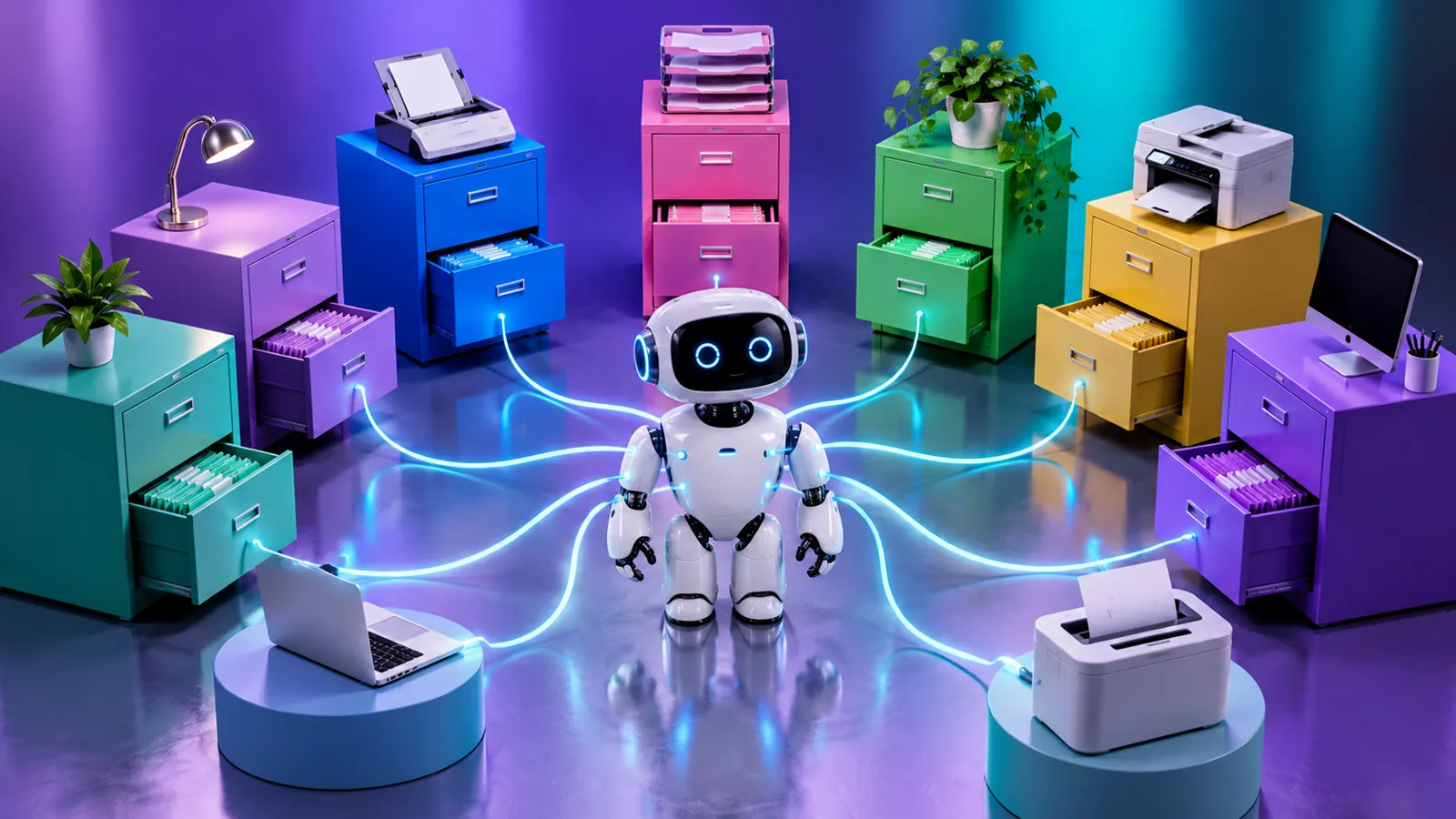
There's a useful commercial clue here. Labs benefit from more activity. Software platforms benefit from becoming the gateway to thousands of tools. Governance vendors benefit when nobody can remember which agent has permission to alter the payroll. Everyone has found a revenue line. The customer still needs to find the result.
Give it one dull job
I'd ignore the fantasy of an all-purpose digital employee and start with one boring, repeated responsibility. Turn yesterday's sales activity into a morning list of exceptions, with a link to the source record for every claim. Read the invoices and flag mismatches, but don't change them. Prepare the customer update, but don't send it.
The job should have a clear trigger, a clear finish and a visible receipt. It should also have somewhere to stop. If the data is missing, the amount is unusual or the recipient is new, the agent should ask. A machine that knows when not to be helpful is more valuable than one that can produce 40 pages before breakfast.

Then widen the permission only after the narrow job works reliably. Read first. Draft second. Change one reversible field third. Keep approval for money, external messages and live records. Autonomy should be earned like an expenses limit, not handed over because the demo had nice lighting.
The cloud computer is clever. The 4,000 connections are impressive. But the business value sits in a much less glamorous place: a job description, limited keys and evidence at the end.
The winning agent won't be the one with the fewest pauses. It'll be the one whose pauses happen before the expensive mistake.
Which becomes the better business, the always-on agent or the control layer that can prove what it did?

Sources
- https://openai.com/index/introducing-dots/
- https://help.openai.com/en/articles/20001495-managing-app-permissions-in-chatgpt
- https://help.openai.com/en/articles/20001280-using-cloud-browser-in-chatgpt
- https://www.anthropic.com/news/claude-for-small-business
- https://www.microsoft.com/en-us/microsoft-agent-365