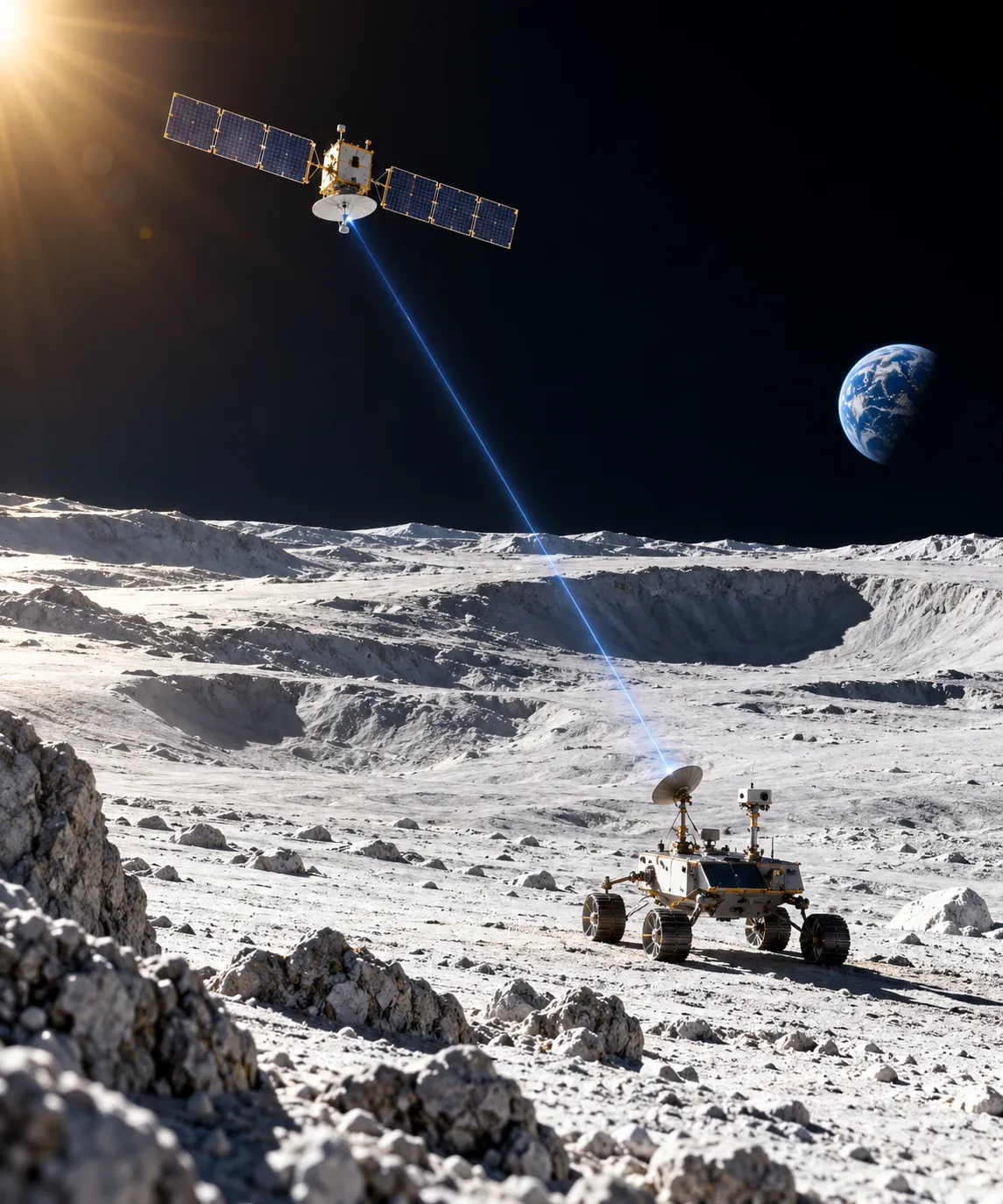
The most interesting business on the Moon may have nothing to do with landing there. It may be charging everyone else to make a phone call home.
Rockets get the theatre because rockets have flames. Lunar communications get diagrams, standards meetings and acronyms. Naturally, the money has wandered towards the boring bit. A rocket gets a livestream. A navigation standard gets a PDF and, quite possibly, the better business.
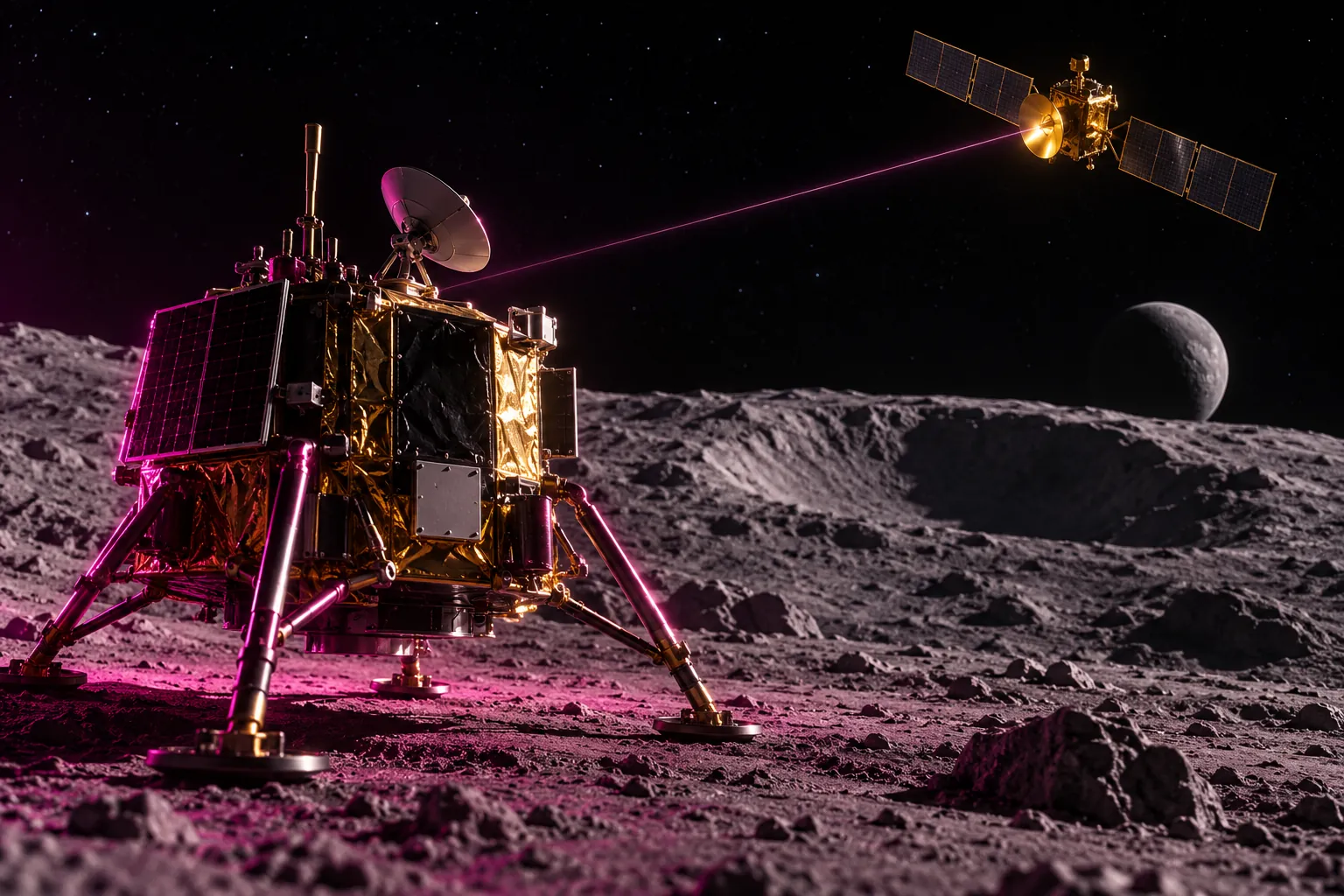
NASA has put Intuitive Machines on a contract to build lunar relay capability for its Near Space Network. The maximum potential value is 4.82 billion US dollars, spread across a five year base period and a possible five year extension. It is an indefinite-delivery contract, which means that headline number is a ceiling, not a cheque. The first task is to prove the relay service works.[1]
That distinction matters. Space companies rather enjoy maximum potential value. It's the corporate equivalent of describing every first date as a potential golden wedding anniversary. Still, even the cautious version tells us where the customer thinks the bottleneck will be. Getting to the Moon is only useful if a lander, rover or astronaut can communicate and work out where it is.
The Moon needs plumbing
NASA, the European Space Agency and Japan's space agency are building LunaNet, a shared set of standards intended to let government and commercial systems work together. It covers networking, navigation, warnings and science services. Instead of every mission booking an isolated link back to Earth, the aim is an internet-like network that can store data when a connection drops and pass it on when the route returns.[2]
This isn't the glamorous version of lunar civilisation. Nobody makes a film about the brave technician who finalised the data protocol. Yet without common plumbing, every mission brings its own pipes, taps and apologetic engineer. That gets expensive before anyone has even found the kettle.
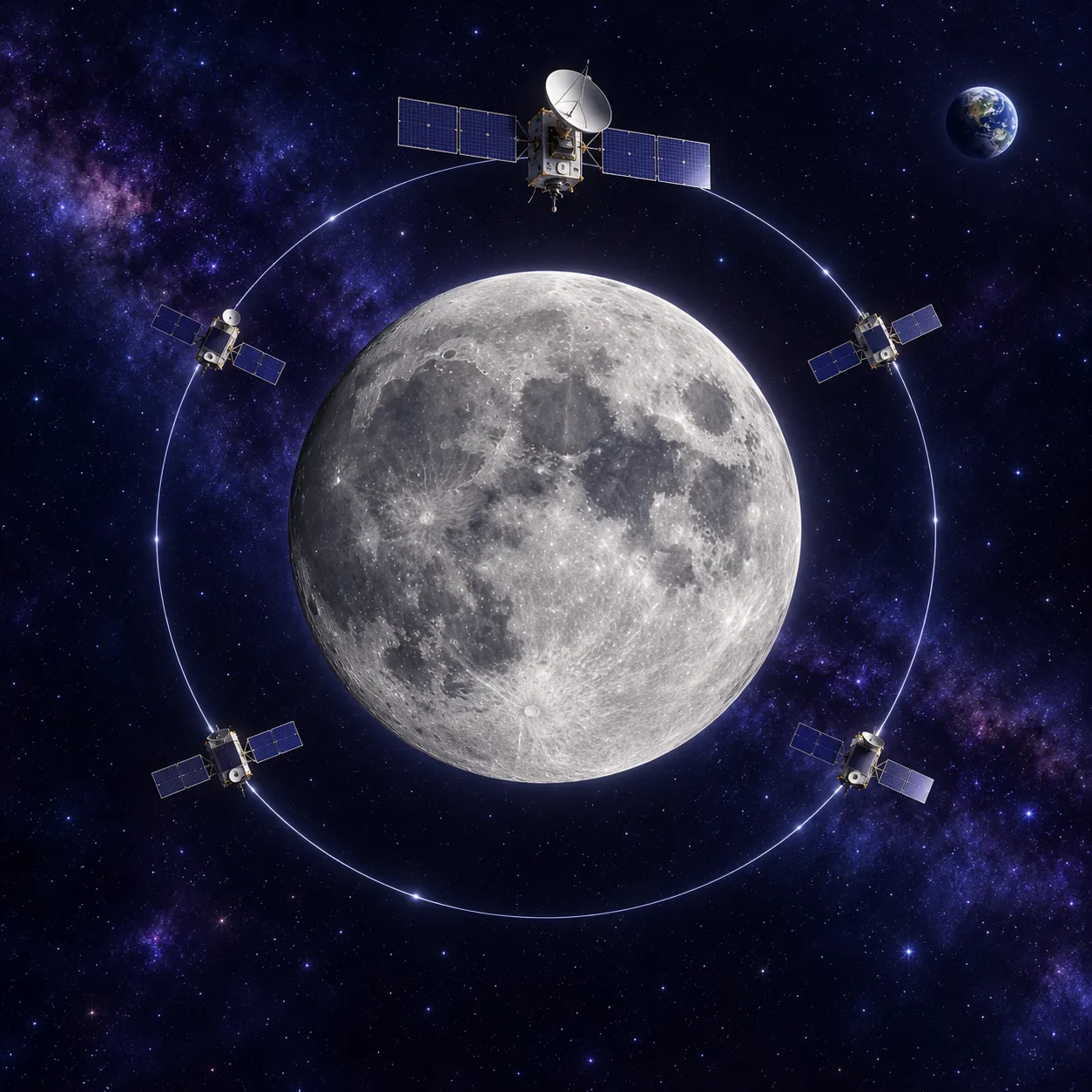
Europe is planning its own Moonlight network around the same standards. The design uses five satellites, four for navigation and one for communications, connected to three ground stations. Initial services are planned before full operations, and the network is being designed around an expectation of more than 400 lunar missions over two decades.[3]
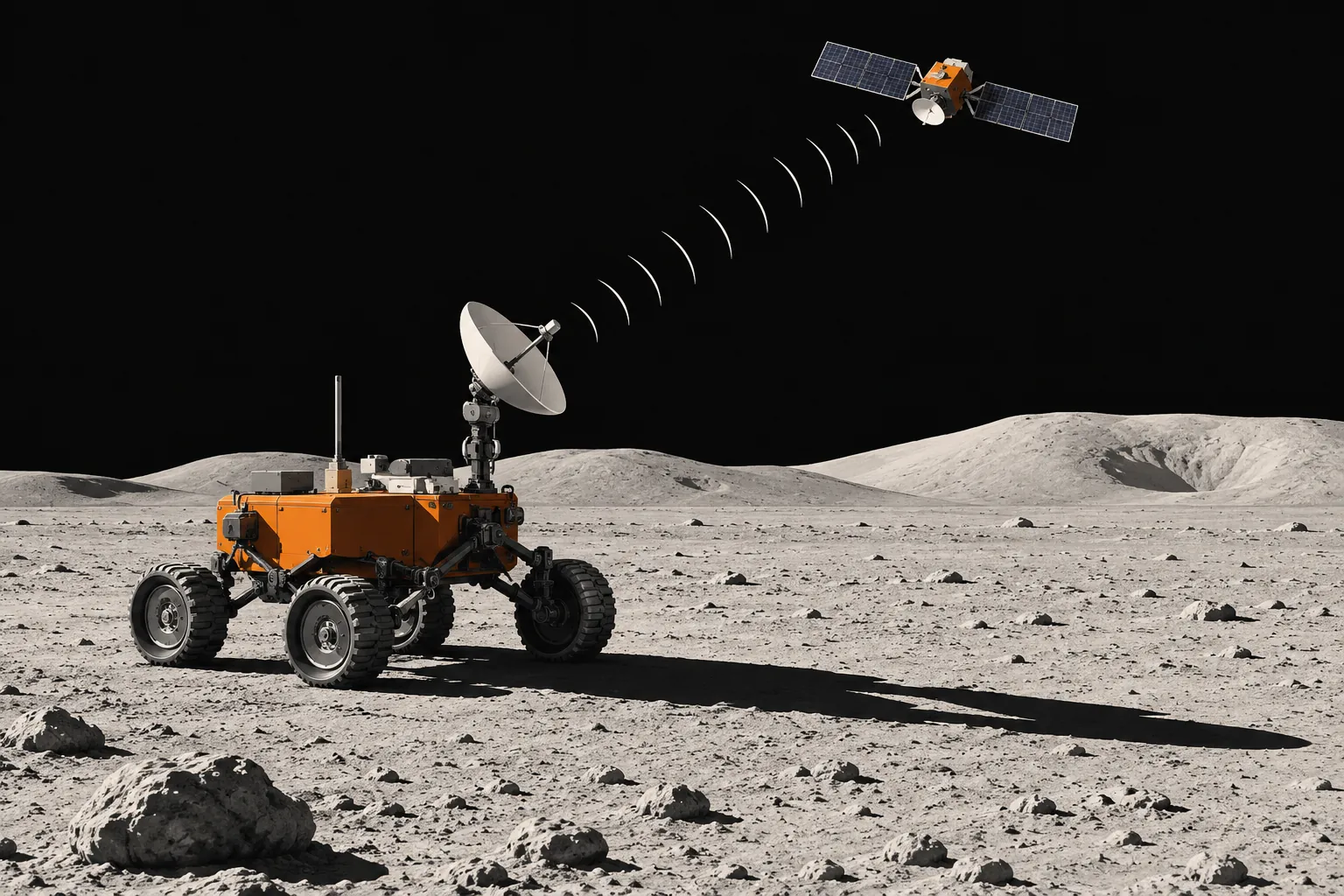
More than 400 missions is an agency forecast, not a queue of paying customers outside the shop. Call me cynical, but a lunar economy funded mainly by public agencies is still a procurement programme wearing moon boots. The commercial market has to be proved after the satellites arrive, not before the presentation ends.
The toll meter is already here
Intuitive Machines plans a five-satellite relay constellation and has described the first service as pay by the minute. Two later satellites are intended to scale that network, with two more planned after them.[4] Humanity has barely moved in and we've already invented lunar roaming charges. The Moon really is becoming prime real estate.
The model makes sense. A mission operator doesn't want to launch an entire communications network any more than a new restaurant wants to build the road outside. Shared infrastructure turns a large upfront problem into a service bill. The relay owner gets recurring use, while the customer saves weight, engineering time and a collection of expensive headaches.
But there is a catch. Infrastructure becomes valuable when enough customers depend on it. Before that, it's expensive machinery circling a place with no residents. Government missions are the anchor customers, and my guess is they'll remain the real market for longer than the lunar economy brochures suggest. Private demand may grow, but PowerPoint colonists don't pay invoices.
The more interesting contest may be between open standards and closed control. LunaNet is meant to let multiple networks interoperate.[2] That should make it easier for missions to switch providers and harder for one operator to own the Moon's entire address book. Good. A public standard should create a market, not quietly appoint a landlord.
My read is that lunar communications are a better test of the Moon business than another heroic landing. Landings prove we can arrive. Networks prove enough people intend to stay, work and pay for service. Until then, the grand lunar economy is still largely governments buying infrastructure from companies so future governments can buy more missions.
The rockets are the moving vans. The network is the rent.
Who builds the first lunar utility that customers still need after the flags have gone home?
Sources
[1] https://www.nasa.gov/news-release/nasa-selects-lunar-relay-contractor-for-near-space-network-services
[2] https://www.nasa.gov/communicating-with-missions/lunanet
[3] https://esa.int/Newsroom/Press_Releases/ESA_launches_Moonlight_to_establish_lunar_communications_and_navigation_infrastructure
[4] https://investors.intuitivemachines.com/news-releases/news-release-details/intuitive-machines-selects-spacex-launch-its-fourth-lunar-lander